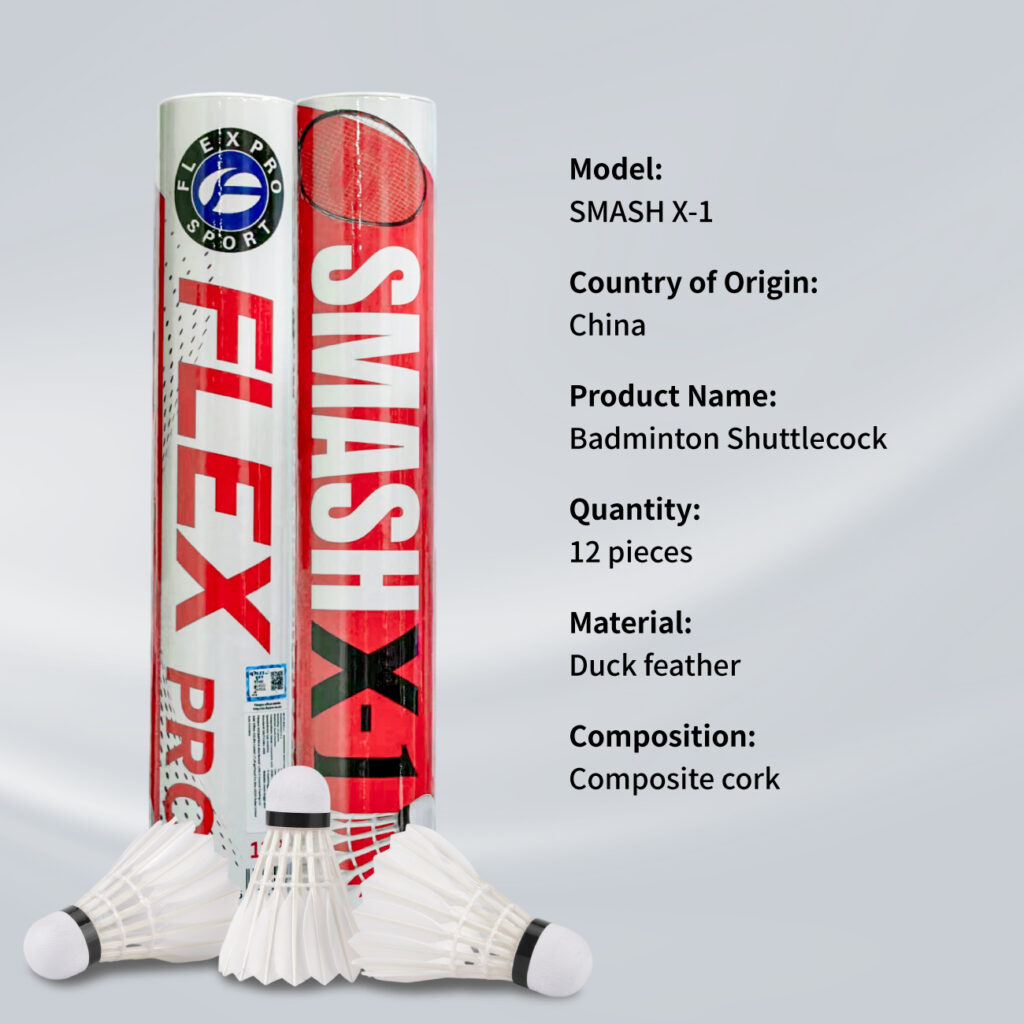
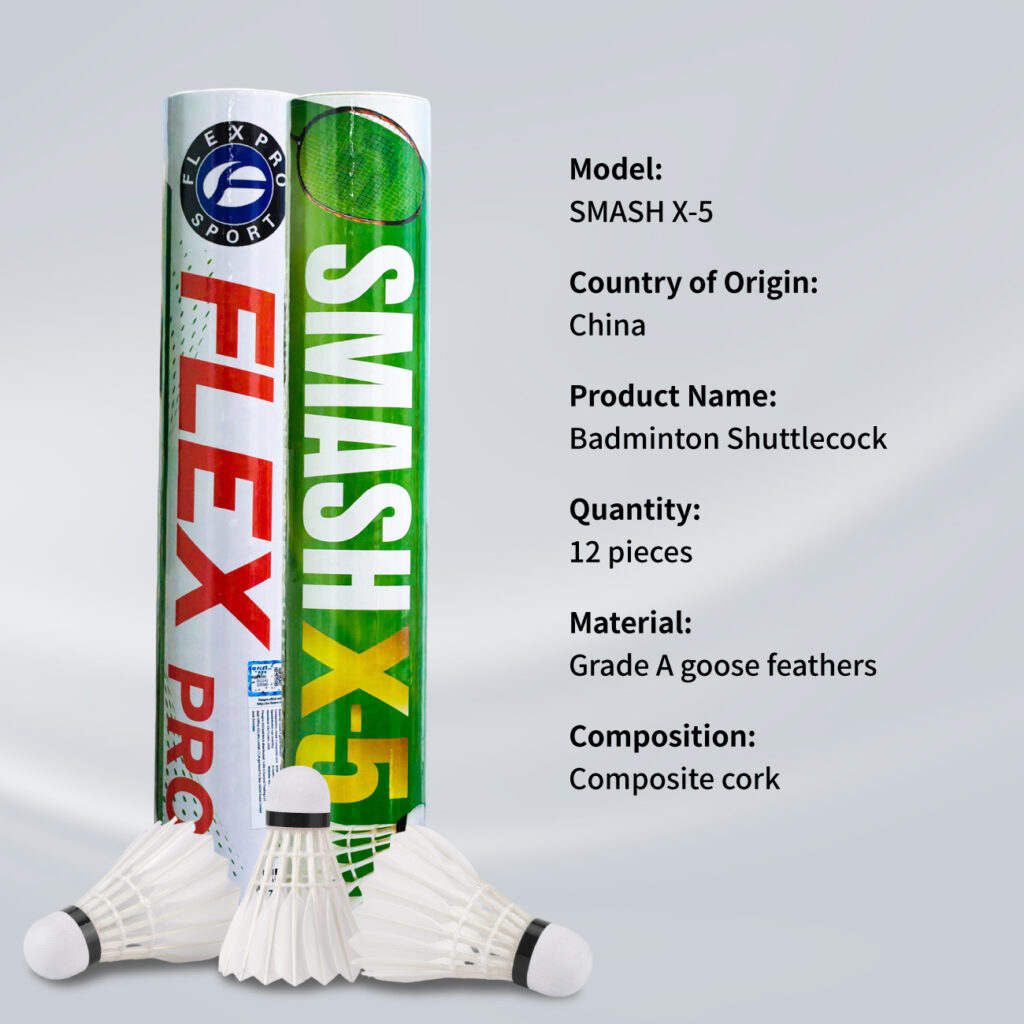
A rally can look clean for three points and still tell you the shuttle is wrong. The flight drifts half a meter long under pressure, the cork feels soft on impact, and control at the net starts to disappear. In tournament conditions, a goose feather shuttlecock for tournament play is not just a preference. It is a performance variable that affects pace, accuracy, touch, and confidence from the first serve.
Players who compete regularly already feel the difference. Goose feather construction typically delivers a more stable trajectory, better deceleration, and a cleaner response off the string bed than lower-grade alternatives. That matters in tight matches, especially when rallies shift between fast rear-court pressure and delicate front-court exchanges. The right shuttle supports the game you trained for. The wrong one forces adjustment in every phase of play.
Why a goose feather shuttlecock for tournament matches matters
Tournament badminton demands repeatable flight. That is the real standard. It is not enough for a shuttle to feel fast for a few shots or survive a handful of rallies. Competitive play requires consistency from shuttle to shuttle within the same tube, and ideally from tube to tube across the session.
Goose feathers are widely used at the higher end because they produce a refined balance of speed, stability, and control. The feather structure tends to create a more predictable cone shape in flight, which helps the shuttle recover and hold its line after impact. For advanced players, that means clearer feedback on lifts, tighter net spinning, and more reliable length on clears and pushes.
There is also the matter of strike quality. A well-built goose feather shuttle usually gives a crisp, centered contact that serious players prefer. The shuttle compresses and releases with better uniformity, which improves feel on sliced shots, defensive blocks, and sudden changes of direction. In tournament settings, where margins are thin, that feedback becomes part of decision-making.
What separates a tournament-grade shuttle from a standard feather shuttle
Not every feather shuttle belongs in competition. Tournament-grade models are defined by construction quality, not just material label. Goose feather alone is not enough.
The first checkpoint is feather selection. Premium shuttles use feathers matched for length, thickness, curvature, and stiffness. That matching affects aerodynamic balance. If feather consistency is poor, one shuttle may sit correctly in the air while the next wobbles or drops short under the same shot.
Cork quality is just as important. A high-density natural cork base generally offers better rebound, cleaner impact, and stronger shape retention over repeated rallies. Lower-quality bases can feel dull or unstable, especially under power. Once the base starts losing integrity, control declines quickly.
Adhesive precision and assembly also matter more than many players realize. A tournament shuttle needs even spacing, secure stitching, and a uniform silhouette. Small production flaws often show up as flight inconsistency long before the shuttle fully breaks.
Flight stability, speed, and control under real match conditions
The best tournament shuttle is not always the fastest one. It is the one that matches the environment and preserves correct rally structure.
In cooler halls, shuttles often play slower. In warmer conditions, they can travel long and flatten out. Humidity also changes how feathers respond. In the UAE and other warm indoor environments, these details matter because a shuttle that feels balanced in one venue may run too quick in another. Tournament players and coaches often select speed grades based on hall temperature, shuttle testing protocols, and the pace needed for fair play.
A high-quality goose feather shuttlecock for tournament use should maintain a stable arc at full power and on touch shots. On clears, it should carry with a true line rather than veer. On smashes, it should descend sharply without floating. At the net, it should allow controlled spin and tight tumbling response without feeling overly fragile.
That last point is where trade-offs appear. Some shuttles feel exceptional for the first phase of use but break down too quickly under strong hitting. Others last longer but sacrifice finesse. Serious players usually prefer a balanced model that protects flight quality first, with durability close behind. There is no value in extra longevity if the shuttle stops behaving like a tournament shuttle halfway through the game.
Durability is important, but consistency is the priority
Many buyers ask one direct question: how long will it last? The better question is how long it keeps tournament-standard flight.
Feather shuttles naturally wear over time. Even premium goose feathers will split, fray, or lose shape after repeated high-speed contact. That is normal. What separates stronger tournament options is how gradually they decline. Better shuttles do not collapse after a few heavy smashes. They remain playable long enough to preserve match rhythm and reduce unnecessary shuttle changes.
Durability depends on more than shuttle quality alone. String tension, hitting technique, mishits, storage conditions, and hall climate all affect wear. A player using very high tension with steep racket head speed will break feathers faster than a developing player with cleaner but less explosive contact. That is why one durability claim never tells the full story.
For clubs, academies, and event organizers, the smart evaluation is cost per playable rally, not cost per tube. A slightly higher-grade shuttle that holds line and speed for longer often delivers better value than a cheaper option that forces constant replacement.
How to choose the right goose feather shuttlecock for tournament play
Start with playing level and event standard. If the shuttle is for sanctioned competition, training for tournament preparation, or high-level club matches, prioritize models designed specifically for competitive consistency. Recreational feather shuttles may look similar in the tube but often perform differently under pace.
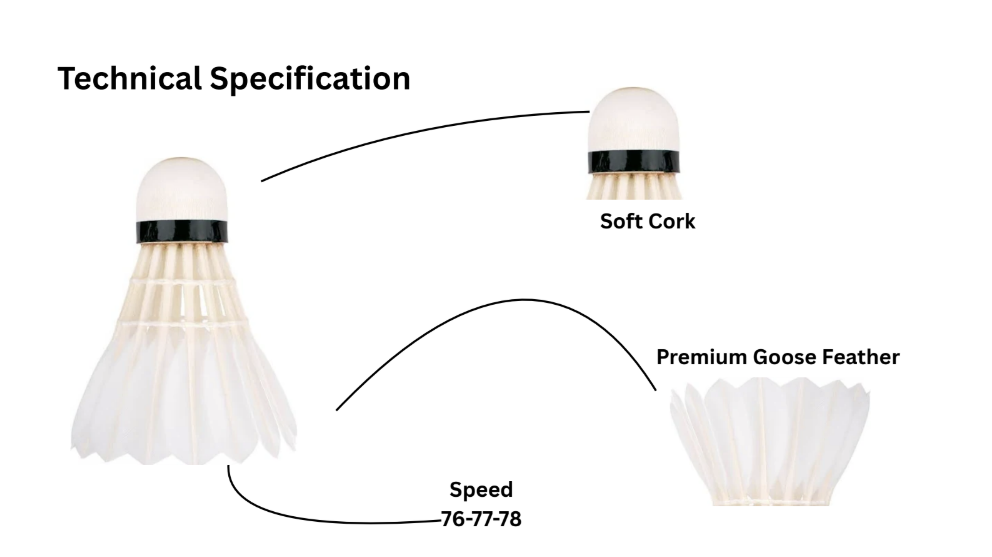
Next, look at the base construction. A quality natural cork base typically supports better rebound and feel than lower-grade composite options. Then check feather uniformity. Premium assembly should look symmetrical, tight, and precise.
Speed grade should be selected carefully. Too slow, and rallies become heavy and unnatural. Too fast, and players lose depth control and timing. The right speed allows a full clear to land close to the back boundary under standard testing conditions. If you manage inventory for a club or tournament, it helps to keep more than one speed grade available for different halls or seasonal shifts.
Brand credibility also counts. Serious badminton suppliers that focus on performance equipment usually apply stricter product selection and quality control. That is one reason competitive players across the region look to specialized platforms such as Flexpro UAE when choosing match-grade badminton gear.
Storage and preparation can change shuttle performance
Even an elite shuttle can perform below standard if stored badly. Feathers are sensitive to dryness, heat exposure, and rough handling. When feathers become overly dry, they turn brittle and break faster. When tubes are compressed or left in poor conditions, shape consistency suffers.
Store shuttle tubes in a stable indoor environment and avoid direct heat. Some players and tournament organizers also condition feather shuttles to preserve moisture balance, but this needs to be done carefully. Too little conditioning does not help. Too much can distort performance. If you are preparing for serious match play, test from the same batch and same storage conditions you plan to use on court.
Who should invest in tournament-grade goose feather shuttles
If your badminton is built around progress, not just participation, tournament-grade shuttles are a smart investment. Competitive juniors, academy players, coaches, club teams, and advanced recreational athletes all benefit from training with the same flight characteristics they expect in matches.
That said, not every session needs the highest-grade shuttle. For multishuttle drills, feeding, or general volume practice, a lower tier may be more practical. For match simulation, tactical work, and competition itself, the shuttle should be as close as possible to tournament standard. Training with inconsistent flight can mask technical issues and distort timing.
The strongest setup is usually a tiered approach: use durable practice shuttles for repetition and reserve premium goose feather shuttles for game play, quality sessions, and pre-event preparation. That keeps costs under control without compromising competitive readiness.
A serious player notices when a shuttle leaves the string bed exactly as expected. The contact is crisp, the arc is true, and the rally unfolds on skill rather than equipment compromise. That is what a tournament-grade goose feather shuttle should deliver every time it enters play.