The difference between reaching the shuttle cleanly and arriving half a step late often starts underfoot. If you are searching for the best badminton shoes for grip, you are really looking for traction that holds through explosive first steps, lateral recovery, and hard braking without costing you speed, comfort, or control.
Grip is one of the most misunderstood parts of badminton footwear. Players often reduce it to a simple question – does the shoe feel sticky on court? In real play, traction is more technical than that. A shoe can feel aggressive for the first few sessions but become inconsistent under dust, or it can provide excellent bite forward while feeling unstable during side-to-side movement. The best-performing models balance outsole compound, tread geometry, court feel, and chassis support.
What actually makes the best badminton shoes for grip
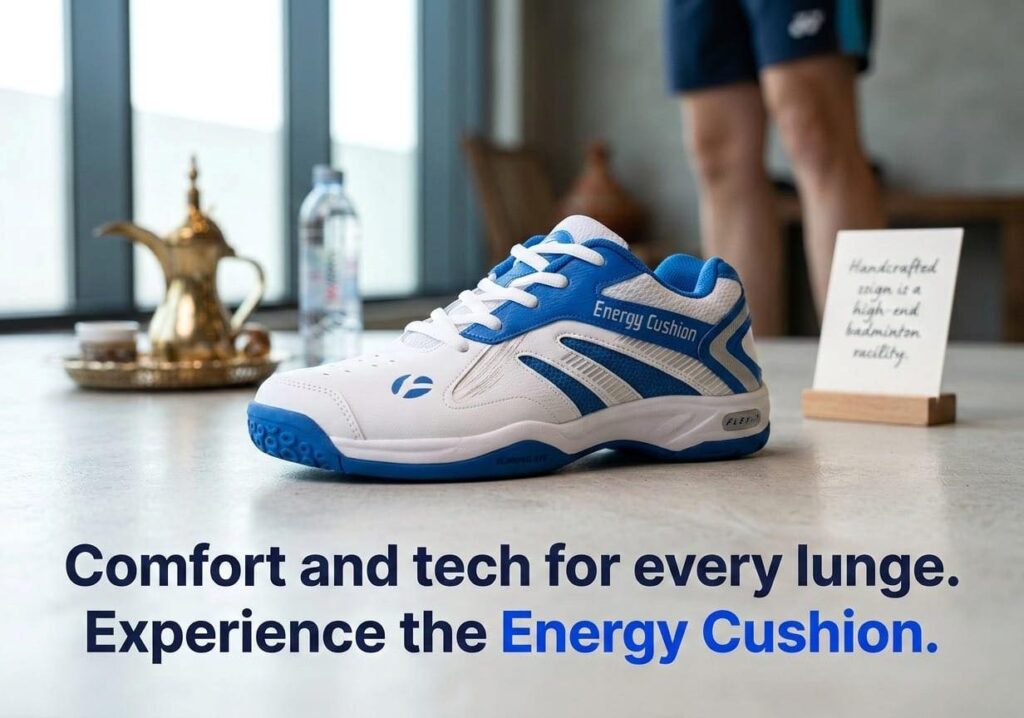
Outsole material is the first variable. Most serious badminton shoes use gum rubber or high-traction non-marking compounds designed for indoor courts. Softer rubber usually grips better, especially on clean wood or synthetic badminton surfaces, but there is a trade-off. It can wear down faster, particularly for players who drag their feet during lunges or train multiple times a week.
Tread pattern matters just as much. Fine multidirectional patterns usually perform better than simple broad grooves because badminton movement is not linear. You are pushing forward into net kills, planting laterally on defense, and rotating through recovery steps in quick succession. A grip-focused outsole needs to create friction across multiple angles, not just when sprinting straight ahead.
Midsole geometry also influences traction. That might sound secondary, but it is not. If the platform sits too high or feels unstable on landing, even a strong outsole cannot deliver full confidence. Low-to-medium court feel usually helps players connect better with the floor, especially during rapid directional changes.
Grip is not only about traction
A shoe with excellent rubber can still underperform if the upper does not lock the foot in place. Internal slippage makes traction feel weaker than it actually is. When your foot shifts inside the shoe on a hard plant, response becomes delayed and energy leaks through the movement.
This is why competitive players should evaluate grip as a system. Outsole bite, lateral support, heel containment, and forefoot stability all work together. The best badminton shoes for grip are usually the ones that feel precise, not just sticky.
Court surface changes the answer
There is no single grip champion for every player because court conditions vary. On well-maintained wooden courts, softer compounds with sharper tread edges often feel exceptional. On dusty community courts or multipurpose indoor floors, some shoes lose bite quickly while others remain more predictable.
Players in clubs and academies should pay attention to consistency, not only peak traction. A shoe that performs at 85 percent all session is usually better than one that starts at 95 percent and falls off once the surface gets dirty.
What to look for before you buy
The first priority is outsole design built specifically for badminton or indoor court sports. Running shoes are a poor substitute. Their outsole geometry and foam height are designed for forward motion, not low, explosive lateral movement. Even if they feel comfortable at first, they usually lack the directional stability needed for safe badminton footwork.
The second priority is forefoot responsiveness. Grip is most valuable when it translates immediately into movement. If the midsole is too soft or too thick, traction can feel delayed. Many players prefer a firmer, more responsive setup because it gives cleaner push-off mechanics.
The third is lateral containment. During defense and recovery, the shoe should keep the foot centered over the platform. Reinforced sidewalls, structured uppers, and secure lacing systems all help here. Premium models often use engineered mesh, synthetic overlays, or reinforced textile constructions to combine support with lower weight.
Durability should also be part of the decision. High-grip compounds are useful only if they hold up to your training load. If you play once a week, you can lean more aggressively toward maximum traction. If you train four or five times weekly, the better investment may be a shoe that gives slightly less initial bite but stronger long-term consistency.
Which type of player needs the most grip
Front-court players usually notice traction first. Quick net approaches, sharp lunges, and instant recovery demand confident braking and re-acceleration. If your game relies on intercepting early and taking the shuttle high, you should prioritize forefoot bite and low court feel.
Rear-court attackers need a different kind of grip profile. They still need strong traction, but stability on landing becomes equally important. Jump smashes and deep recovery steps place more demand on heel control and platform structure. A shoe that is too minimal may feel fast, but it can become unstable over longer sessions.
All-around doubles players need balance. They cannot sacrifice stability for speed or cushioning for ground connection. For this group, the best badminton shoes for grip are usually versatile performance models with reliable rubber, medium-profile cushioning, and a supportive chassis.
Lightweight vs supportive shoes
This is one of the biggest trade-offs in the category. Lightweight shoes often feel quicker and more direct. They help advanced players stay reactive and reduce the heavy sensation that can build during long rallies. The downside is that some stripped-down models achieve weight reduction by cutting support features, which can make lateral plants feel less secure.
Supportive shoes tend to inspire more confidence on hard stops and extended training sessions. They are often better for stronger players, heavier players, or anyone with a history of ankle instability. The trade-off is that they may feel less agile if the design becomes bulky.
The right answer depends on how you move. Fast, efficient footwork can benefit from lighter construction. High-force movers who plant aggressively may need more structure even if it adds grams.
Signs a shoe does not have enough grip for your game
You do not always notice weak traction as a dramatic slip. Often it shows up as hesitation. You stop trusting your first step. You brake earlier than usual. Your recovery becomes wider and less efficient because you are subconsciously protecting against sliding.
Another sign is excessive sole noise without control. Some shoes squeak loudly but do not actually provide better traction. Sound can be a byproduct of rubber and floor interaction, not proof of performance. What matters is whether you can load the foot confidently at speed.
Pay attention to fatigue as well. If your lower legs feel overworked after sessions, part of the issue may be footwear forcing you to stabilize more than necessary. Good grip reduces wasted motion and helps preserve movement efficiency over time.
Fit can make or break grip performance
Even elite outsole engineering fails if the shoe shape does not match your foot. A wider forefoot may need a roomier last to avoid pressure and maintain natural toe splay. Narrow-footed players often need a more secure wrap to prevent movement inside the upper.
Toe room should be controlled, not cramped. Your toes should not jam on lunges, but they also should not float. Heel hold is equally critical. A locked heel improves braking and directional change because it keeps the rearfoot stable through impact.
Try shoes at the end of the day if possible, when feet are slightly more expanded, and wear the same type of socks you use for play. Small fit differences become major performance differences in badminton.
How to keep grip performing longer
A great outsole still needs maintenance. Dust is the fastest way to reduce traction on indoor courts. Wiping the outsole between games can restore bite quickly, especially on dusty community floors.
Keep badminton shoes for indoor use only. Taking them outdoors or wearing them casually grinds down the tread and hardens the rubber faster. Storage matters too. Heat can degrade compounds over time, so avoid leaving shoes in a hot car after training.
If you rotate between two pairs, traction and cushioning often last longer because the materials get more time to recover between sessions. For serious players, that is not excess – it is equipment management.
Choosing with a performance mindset
The best badminton shoes for grip are not simply the tackiest pair on the shelf. They are the shoes that give you repeatable traction under your playing conditions, fit your foot securely, and support your movement pattern without slowing you down. That is why serious buyers should judge grip alongside stability, court feel, upper lockdown, and durability.
At Flexpro UAE, that performance-first approach is how badminton equipment should be evaluated – by what it does for speed, control, and confidence under match pressure. If you choose footwear the same way you choose a racket or string setup, you are far more likely to end up with a shoe that improves movement instead of just looking technical.
The right grip should disappear during play. You should not be thinking about your footing at all – only the next shot, the next recovery, and the next chance to take the rally early.